MALE JAW & FACIAL SKELETAL SURGERY · ISTANBUL
Facial structure built the way it should be: skeleton first. Orthognathic repositioning where the anatomy calls for it, custom implants only where they belong — with occlusion, airway and 20-year stability engineered into every plan.
BY PROF. DR. SELÇUK BASA · 40+ YEARS · ORAL & MAXILLOFACIAL SURGERY
THE STRUCTURAL APPROACH
A masculine jawline that photographs well but chews badly, breathes worse and fails in ten years is not a result — it is a complication on a delay timer. Structure comes first. Always.
If the mandible or maxilla sits in the wrong position, no implant can fix it — it can only hide it. Orthognathic surgery moves the foundation itself: projection, width, definition and facial thirds are corrected at bone level.
Your bite and your breathing are engineered into the plan, not sacrificed to it. Jaw advancement done correctly can enlarge the airway — the same surgery used to treat obstructive sleep apnea.
Patient-specific implants (PSI), designed on your own CT — to refine the result, never to replace the correction.
JAWLINE SCIENCE
Forums argue about it in ratios and angles. Surgery answers it in millimetres of bone. These are the structural variables we measure and control:
How far the chin and mandible project relative to the upper face — the primary driver of a "weak" or "strong" profile.
The angle behind the jaw and the height of the ramus — together they draw the jawline you see from the side.
Lower-face width viewed from the front — the frontal counterpart of jawline definition.
Rotating or repositioning the jaws changes the entire lower-face geometry — done correctly it improves the bite; done carelessly it destroys it.
Maxillomandibular position directly changes pharyngeal airway space. Structural jaw surgery is also airway surgery — a functional benefit no implant can offer.
Bone support is what holds soft tissue up for decades — the variable that decides how a result looks at 50, not just at 30.
DIGITAL SURGICAL PLANNING · AI
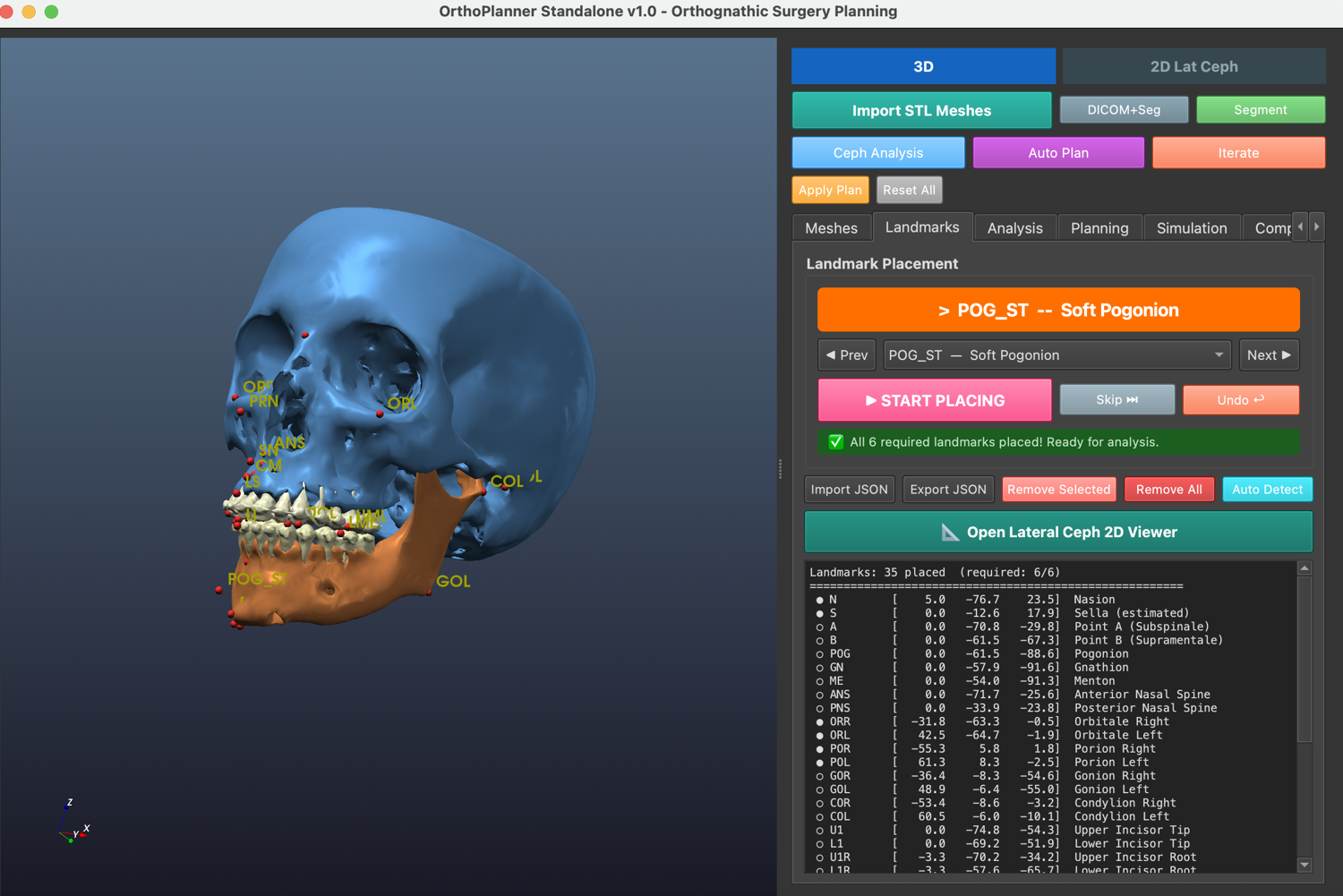
Every case is modelled in three dimensions with AI-assisted planning software developed by Prof. Basa himself — one of the pioneering names of digital surgical planning. The osteotomies, movements and implant geometry are decided to the millimetre before the operating room.
ORTHOPLANNER — AI-ASSISTED 3D PLANNING SOFTWARE DEVELOPED BY PROF. BASA

CUSTOM IMPLANTS (PSI)
On the right foundation, PSI is a precision tool: measured dimensions, bite untouched. Oversized and misplaced, the same technology produces the industry's cautionary tales.
Sharper gonial definition and a continuous jaw border — milled to your CT anatomy, fixed to bone.
Controlled lateral augmentation where frontal width is deficient — in millimetres decided by planning, not by trend.
When only contour is missing, a custom implant — or genioplasty — completes projection and shape.
THE SURGEON
Professor of Oral & Maxillofacial Surgery with more than 40 years in the surgical treatment of dental, jaw and facial deformities — including two terms as dean and a career spent on exactly the structures this field is about: the male facial skeleton, the bite that sits on it and the airway behind it.
Full academic profile → maxillofacial.com

ETHICS & CANDIDACY
INTERNATIONAL PATIENTS
READING ROOM
CONSULTATION
Genia Klinik · Valikonağı Cad. No:97, Nişantaşı, Istanbul · geniaklinik@gmail.com